


Anchoring Social Skills in the Real World: Authentic College Support Program
Most would agree that the earliest institutions of education were in the form of apprenticeships. The Master Carpenter would take on a student and teach them how to construct buildings through on the job training. The student would learn math, science, physics, and business while actually doing it. Indeed, our schooling systems still rely heavily on the apprenticeship model. Doctors spend the majority of medical school in clinics and hospitals, internships are required for graduation in business degree programs, and teachers often spend their final year teaching in a classroom. It is through these experiences that students witness the inextricable link between theory and practice.
The social skill deficit
Arguably, the most important skills we learn in life are social skills. In Daniel Goleman’s landmark publication, Emotional Intelligence – Why it can matter more than IQ, he makes the argument that perceiving, using, understanding, and managing emotion is essential for success. Nevertheless, we assume most students will develop these traits simply through implicit instruction, such as modeling, daily experiences, and peer feedback. However, the development of these skills relies heavily on one’s innate Emotional Intelligence. Thus, we are expecting those with poor social skills to develop social skills through being more social.
Social thinking curriculum
Many schools and educational programs have adopted various social skills curriculum to address these deficits. Many of these evidenced-based strategies assist students in developing the interpersonal attributes necessary to navigate an often-foreign social landscape. At Mansfield Hall we admire Michelle Winner Garcia’s Social Thinking® curriculum, an excellent program to help students develop their ability to develop the requisite social skills to develop friendships, maintain employment, and have healthy relationships.
Anchoring social skills in the real world
So where is the social skills apprenticeship? This is the missing link in many schools that offer social skills instruction, but no context to employ their skills. There is no doubt that Ms. Winner Garcia’s and other social skills experts would argue that their programs are meant to increase the amount of social opportunities and thus, reinforce their curriculum. It is then the responsibility of the teachers and care-providers to provide these apprenticeships and “on the job training” to give students the opportunity to practices these vital skills. Unfortunately, the double-edged sword for schools and programs is that those who have the greatest need to develop social skills are also the ones who have the least opportunities for socialization.
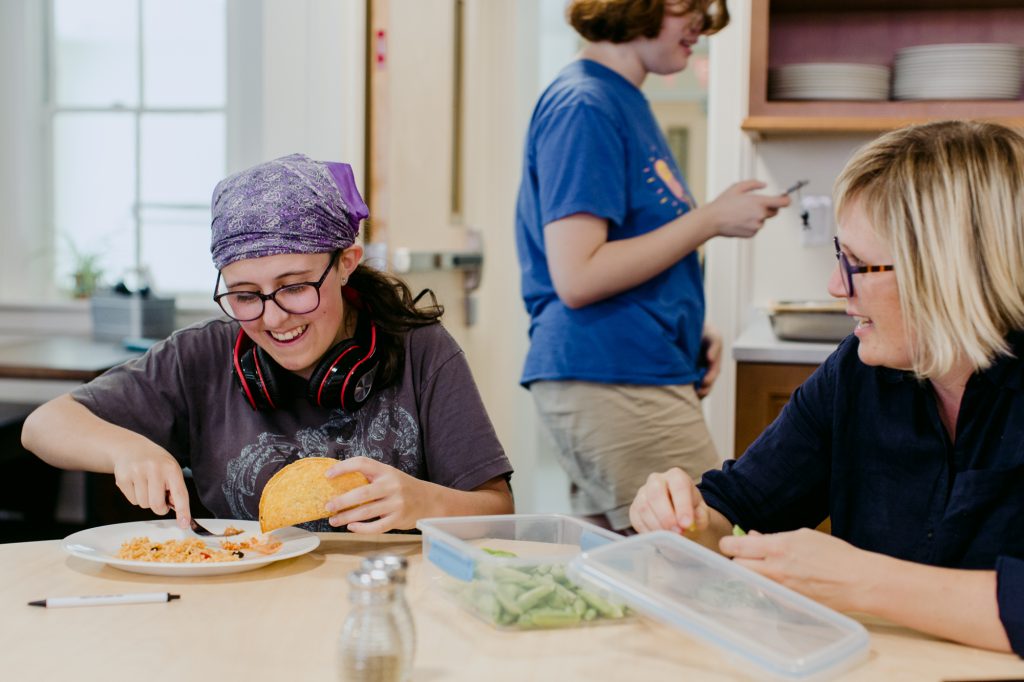
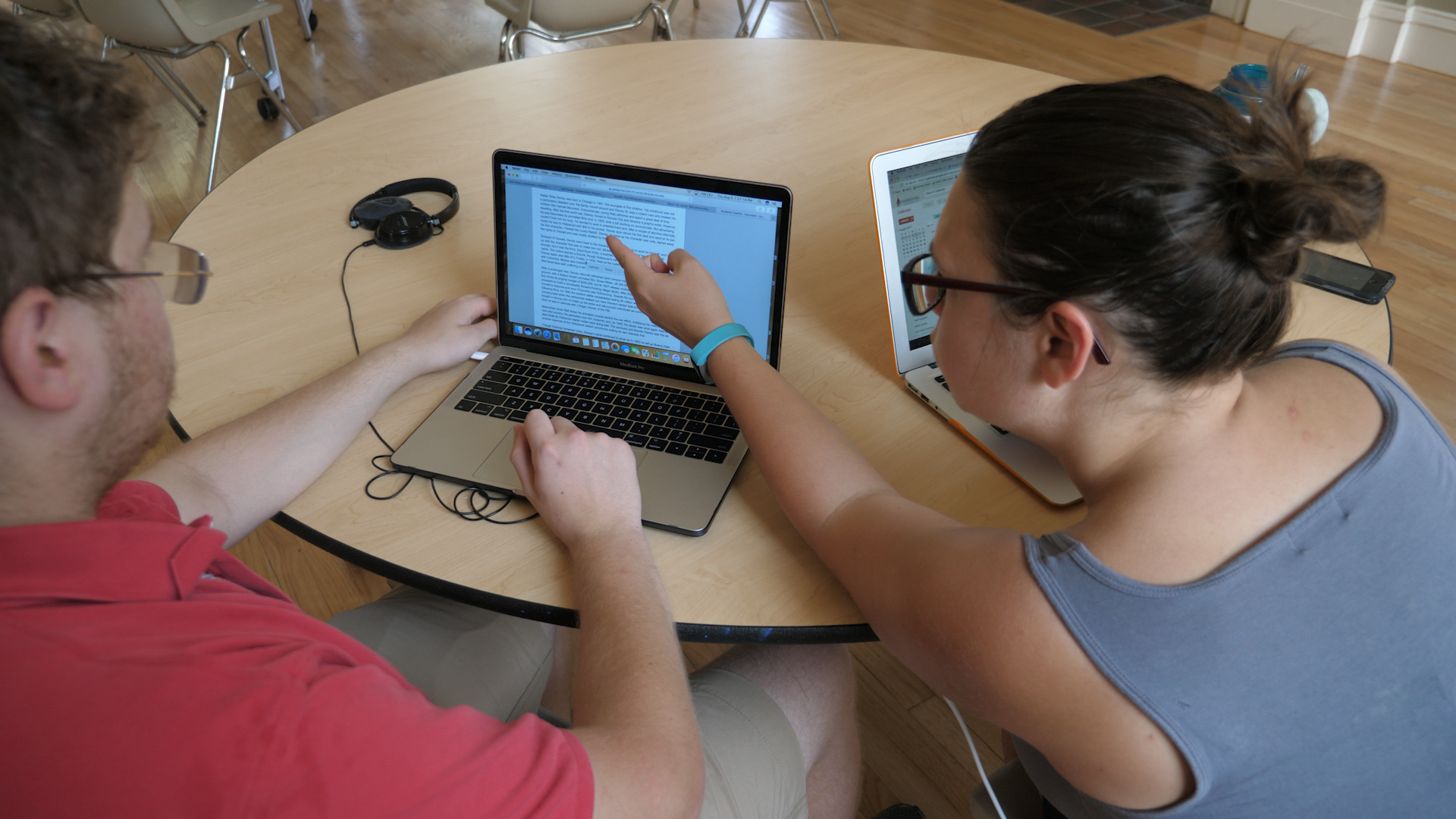
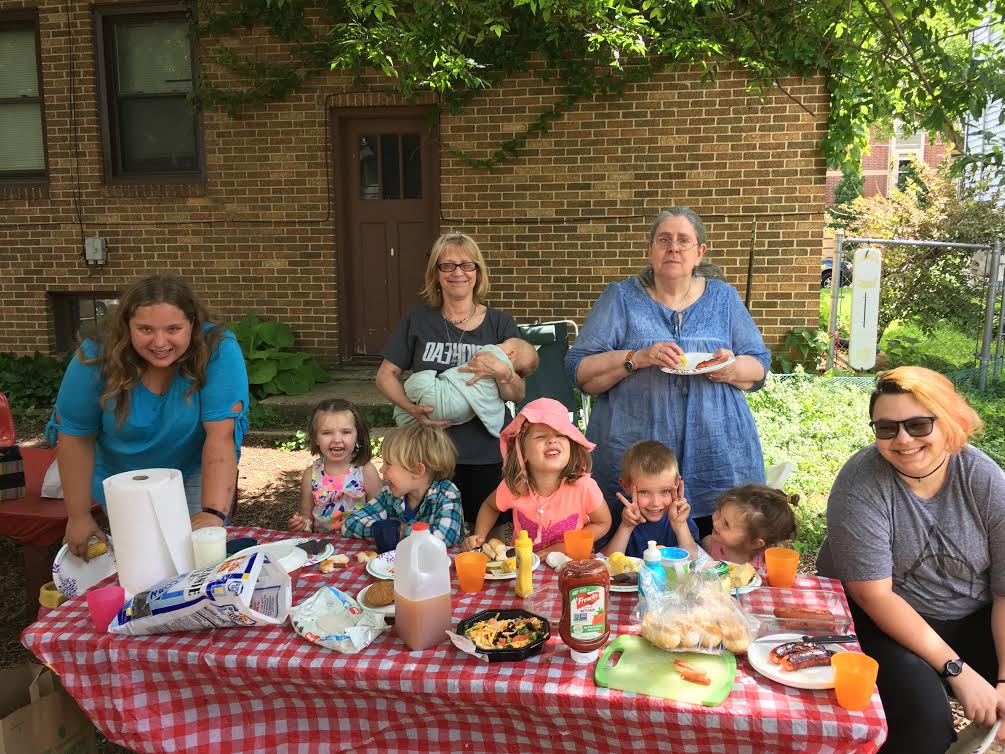
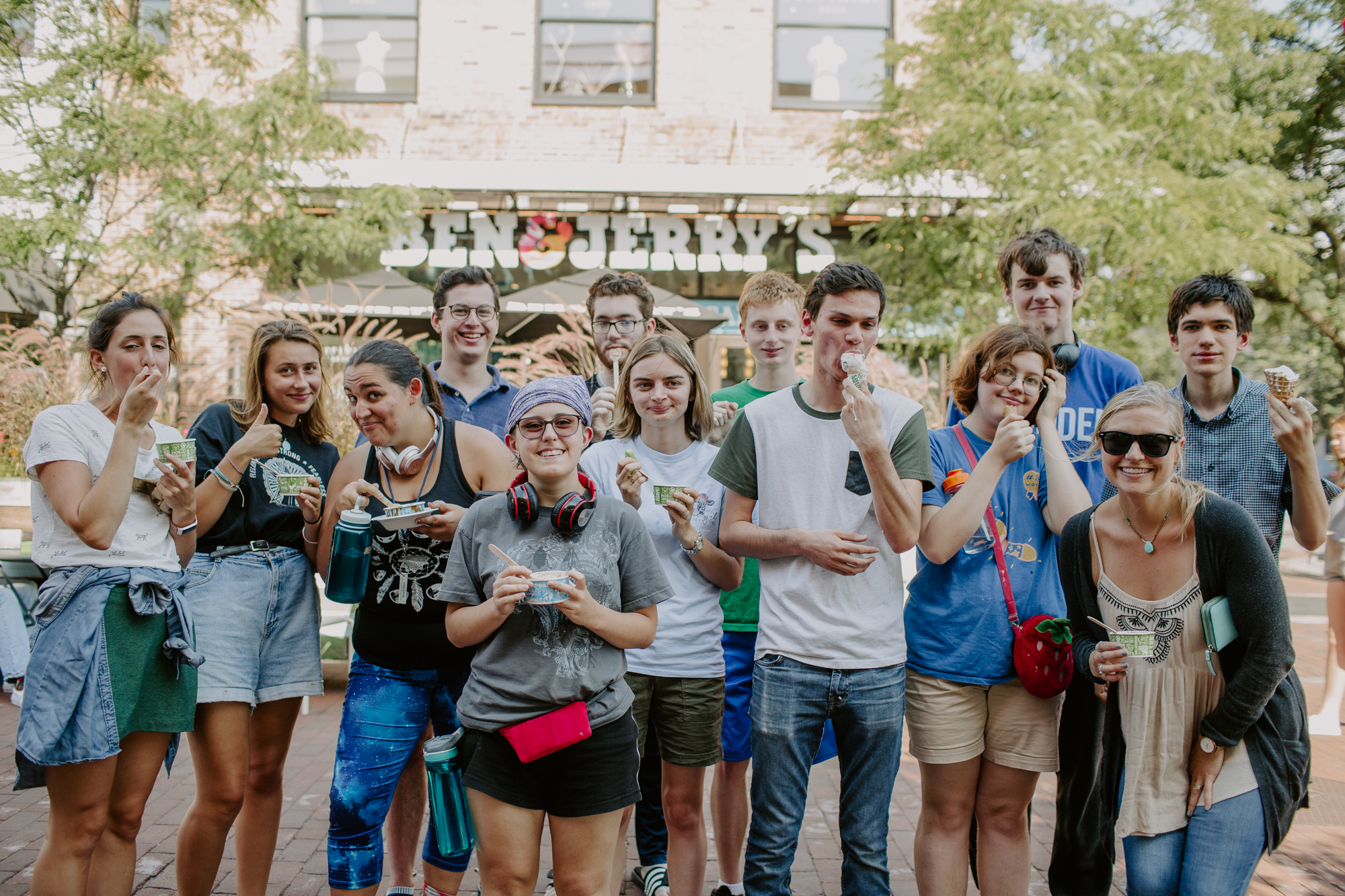
At Mansfield Hall, a central tenet of our philosophy is providing social skills instruction that is then anchored in the real world. Many of our students are using Garcia’s Social Thinking, but we are also taking it as our responsibility to be sure they have authentic situations to use the curriculum. Therefore, we immerse our students in daily opportunities for authentic social opportunities. Our Mansfield Fellows, traditional college students participating in our program and living at the Hall, provide daily modeling of developmentally appropriate social skills. All of our students are required to volunteer weekly to develop vocational and communication skills while developing perspective. Our students must participate in weekly recreational and social activities on the college campus, such as chess club, intramural sports, or outing clubs. In addition, our staff is trained in guiding students through social situations, so that they are able to assist students practicing their skills in a safe and respectful atmosphere.
With any pertinent skill in life, people must have the opportunity to both learn the skill and practice it.
Students who are challenged by social skills often find a vicious circle, where their social deficits mitigate the opportunities needed to develop their skills. Consequently, it’s imperative that we find the “social apprenticeships” in life that allow for the authentic development of social skills.
Feeling overwhelmed in college- but not sure why? you’re not alone.
The key isn’t just “pushing through”, it’s learning to recognize what’s happening before you hit that wall, and having systems to reset.
That might look like:
• stepping outside for a walk
• box breathing between classes
• putting on a guided meditation
• reaching out to someone you trust
Small supports = big difference over time.
At Mansfield Hall, we help students build the awareness and tools to regulate, recharge, and navigate college in a way that actually works for them.
What’s one thing that helps you reset when you’re overwhelmed?
#CollegeLife #StudentMentalHealth #ExecutiveFunction #StressManagement


Excellent week across the board!
People Ops team member Jo touched down in Madison, receiving a warm welcome with coffee and a trip to see the Capitol building. VP of Program Ops Hayley grounded herself and took in the beauty of the Statehouse. Pancakes were served, and Burlington student Nikhil took the stage to perform with his choir.
A great week to zoom out and back in- and reflect on all the things we have to be grateful for!
#collegesupport #neurodiversity #worklifebalance

College can be energizing… and draining.
If you’ve ever felt socially exhausted, you’re not alone.
Understanding your limits (and what helps you recharge) can make all the difference.
#CollegeStudents #Neurodiversity #StudentWellbeing

Hangin` in there until spring weather kicks in!
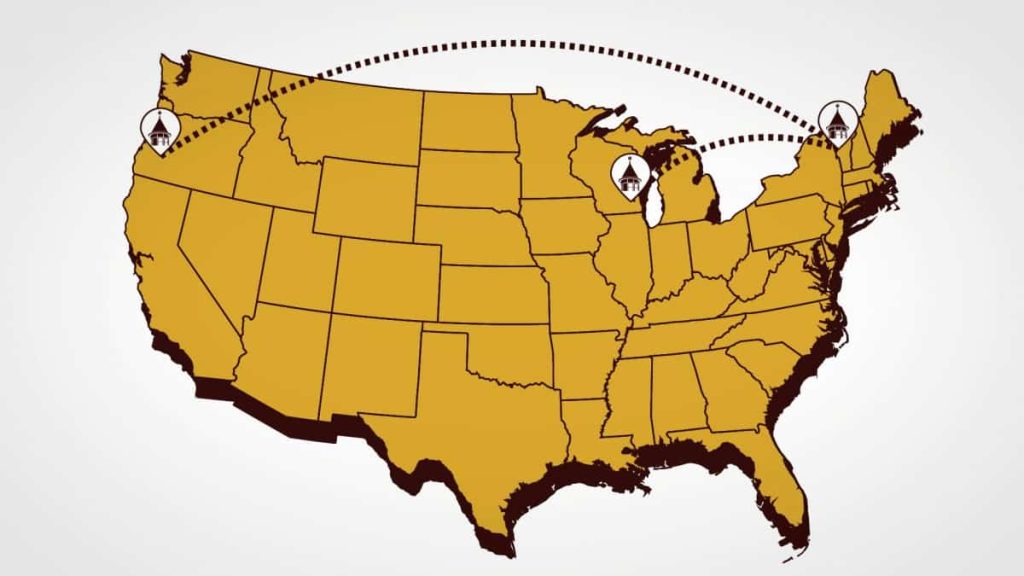
This week at Mansfield Hall our Eugene, OR students did some rock climbing, Burlington, VT connections students took an outing to the bowling alley/arcade, while others took a trip to a local sugar house to learn about all things maple syrup. Students in Madison, WI continued their endeavors to learn about all things maintenance...and they make it look fun!
Happy Friday Friends- enjoy the weekend.

Mansfield Hall had the joy of hosting some professionals at our Madison, WI location recently, which included a student panel.
One of the questions asked was: What do you like about Mansfield Hall?
The answer: how inclusive it is.
No one gets to choose the brain they have, but we do get to choose the world we create. We choose to accept, celebrate, and work toward a world that’s more inclusive of every brain and the incredible things they can do.
Happy World Autism Awareness Day. We see you, and we celebrate you for all that you are and all that you can be!
❤️MH
#autismawareness #neurodiversity #collegesupport

Sensory overload happens when your brain receives more sensory input than it can comfortably process.
Our nervous systems are constantly taking in information, but when there’s too much coming in (or it’s coming too fast) our systems can become overwhelmed.
We get it, and it can be managed with small, intentional supports like reducing input, creating predictable routines, and building in quiet recovery time.
