

It Is Time To Reconsider How We Use The Term “Independence” With Neurodiverse College Students Who May Have An ASD, NLD, or NVLD Diagnosis
The Goal for neurodiverse college students is not “Independence.” There. We said it. And we meant it. But please, let us explain…
For neurodiverse students with a diagnosis of NLD, NVLD, or ASD, it can be confusing to consistently have educators and family focus on the mythical quest for “independence” – especially when it is not actually what we mean. No successful adult is an island unto themselves, independent from everyone around them, existing in a vacuum and disconnected from others. Far from it!
Rather, successful adults have partners and friends, family and coworkers, and they interact with a whole host of individuals who play an important part in their lives. Successful adults are both the central characters and active participants in their own ongoing narrative. They are aware of their strengths and areas of growth, they ask for and receive support, and they are able to weave that support into the fabric of their lives to create purpose and meaning, both for themselves and for others. They are not independent. They are interdependent.
College can be a complicated time for emerging young adults – they are embarking on a process of healthy individuation from family but might not yet have fully developed the skills needed to be successful interdependent young adults. And in the interim, it is simply too easy for emerging young adults who keep hearing the mantra of “independence” to become confused, thinking that it is possible The Goal is to become independent in the vein of Robinson Crusoe or Chuck Noland (Tom Hanks in Cast Away). Fun Fact: Both of these are fictional characters in fictional stories!
No. The Goal is not Independence. It is something much more interesting.
The Goal is for emerging young adults and college students to create an interconnected web of healthy interdependence, at the center of which is an individual with agency who is playing an active role in the continuous creation, cultivation, and curation of their own experience. The goal is self-awareness, an actualization of the self, agency, the ability to create and sustain connections, and the capacity to both give and receive support and help as needed.
No “successful adult” is independent. Instead, they are active participants in their own ever-evolving experience of interconnectedness. College can be a great place to explore this stage of life, and Mansfield Hall can be a great place to learn and practice these skills. Through connection with community, and ongoing support in a continuous coaching model, Mansfield Hall students have the opportunity to learn, practice, and master the skills of being an autonomous individual with agency – who is also interconnected and interdependent. This involves students developing the self-awareness (metacognition), self-advocacy, and applied executive functioning skills required to be self-directed individuals, and as an added bonus it can be pretty fun to be a part of a supportive social community, too!
So let’s be careful when we use the term “independence” with any college student, but especially college students with an ASD, NLD, or NVLD diagnosis. It is simply too easy to send the message we expect them to “do it all on their own” – when, in fact, none of us do! Instead, let’s continue to encourage students to learn how to do what they can on their own, but also learn the joy and wonder of what they can create when they sit at the center of an interconnected web of healthy interdependence with the world around them.
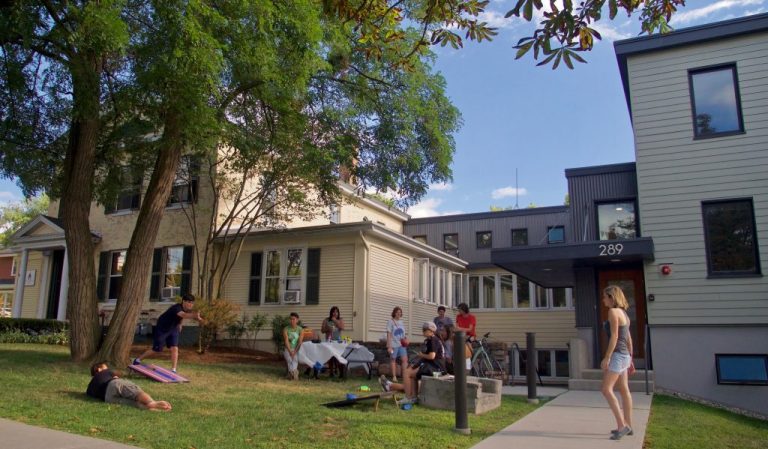
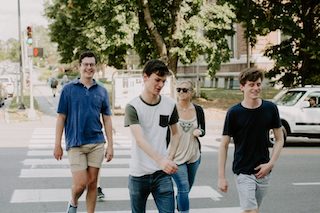
Feeling overwhelmed in college- but not sure why? you’re not alone.
The key isn’t just “pushing through”, it’s learning to recognize what’s happening before you hit that wall, and having systems to reset.
That might look like:
• stepping outside for a walk
• box breathing between classes
• putting on a guided meditation
• reaching out to someone you trust
Small supports = big difference over time.
At Mansfield Hall, we help students build the awareness and tools to regulate, recharge, and navigate college in a way that actually works for them.
What’s one thing that helps you reset when you’re overwhelmed?
#CollegeLife #StudentMentalHealth #ExecutiveFunction #StressManagement


Excellent week across the board!
People Ops team member Jo touched down in Madison, receiving a warm welcome with coffee and a trip to see the Capitol building. VP of Program Ops Hayley grounded herself and took in the beauty of the Statehouse. Pancakes were served, and Burlington student Nikhil took the stage to perform with his choir.
A great week to zoom out and back in- and reflect on all the things we have to be grateful for!
#collegesupport #neurodiversity #worklifebalance

College can be energizing… and draining.
If you’ve ever felt socially exhausted, you’re not alone.
Understanding your limits (and what helps you recharge) can make all the difference.
#CollegeStudents #Neurodiversity #StudentWellbeing

Hangin` in there until spring weather kicks in!
This week at Mansfield Hall our Eugene, OR students did some rock climbing, Burlington, VT connections students took an outing to the bowling alley/arcade, while others took a trip to a local sugar house to learn about all things maple syrup. Students in Madison, WI continued their endeavors to learn about all things maintenance...and they make it look fun!
Happy Friday Friends- enjoy the weekend.

Mansfield Hall had the joy of hosting some professionals at our Madison, WI location recently, which included a student panel.
One of the questions asked was: What do you like about Mansfield Hall?
The answer: how inclusive it is.
No one gets to choose the brain they have, but we do get to choose the world we create. We choose to accept, celebrate, and work toward a world that’s more inclusive of every brain and the incredible things they can do.
Happy World Autism Awareness Day. We see you, and we celebrate you for all that you are and all that you can be!
❤️MH
#autismawareness #neurodiversity #collegesupport

Sensory overload happens when your brain receives more sensory input than it can comfortably process.
Our nervous systems are constantly taking in information, but when there’s too much coming in (or it’s coming too fast) our systems can become overwhelmed.
We get it, and it can be managed with small, intentional supports like reducing input, creating predictable routines, and building in quiet recovery time.
