

College Support Program: Getting Ready for the Fall at Mansfield Hall
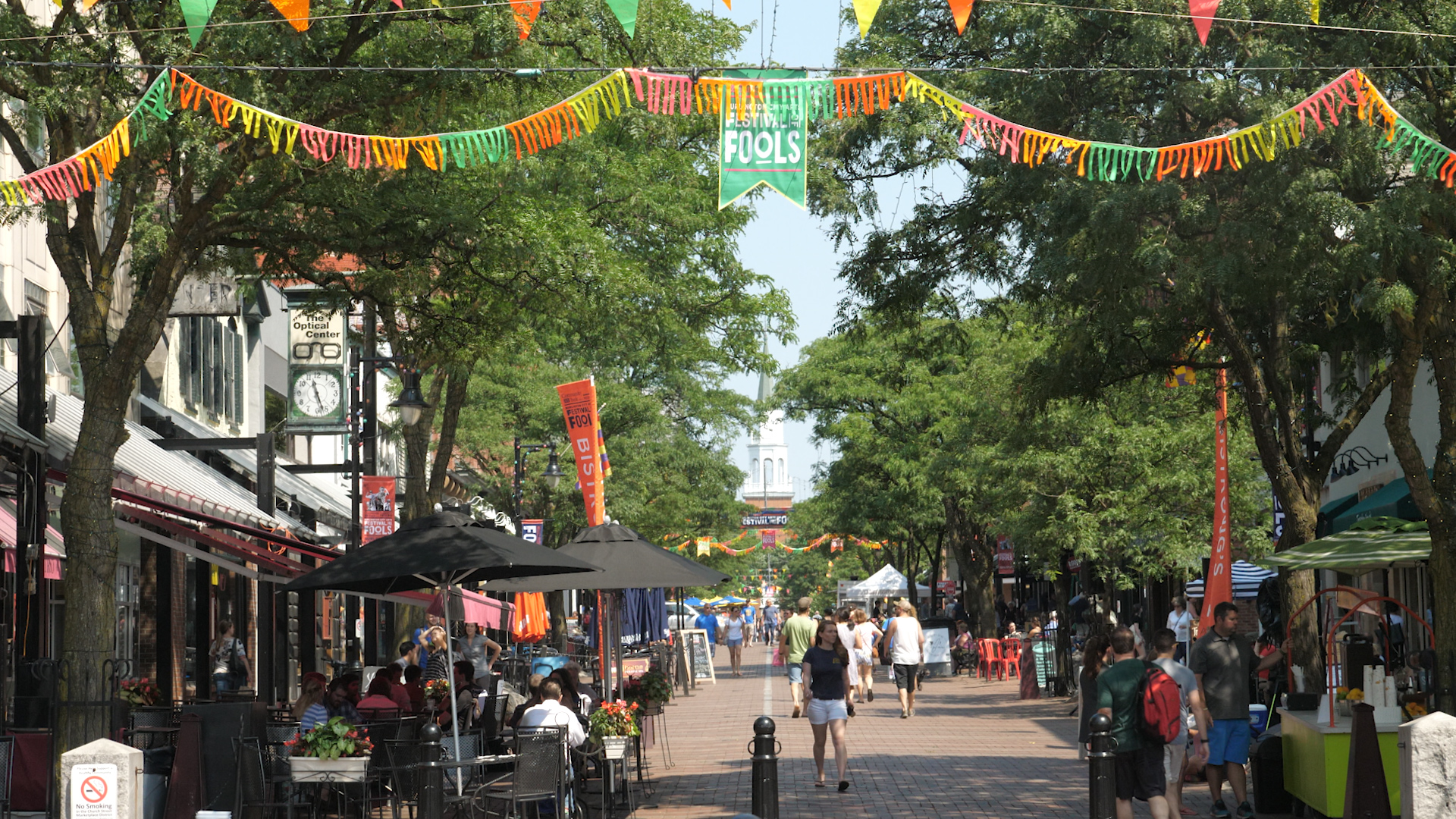
Walking home from dinner last week, after enjoying a beautiful evening on Church St., in downtown Burlington, I overheard someone say that it was the first night that the sun went down before 8pm, and yesterday I saw my first yellow leaf of the season. No doubt about it: summer is slowly coming to a close, and fall is making its first appearances in Northern Vermont. While we will certainly miss the halcyon days of summer, fall brings with it a new kind of excitement, and Burlington is just beginning to buzz in anticipation of the undergraduate invasion that marks opening days at the local colleges.
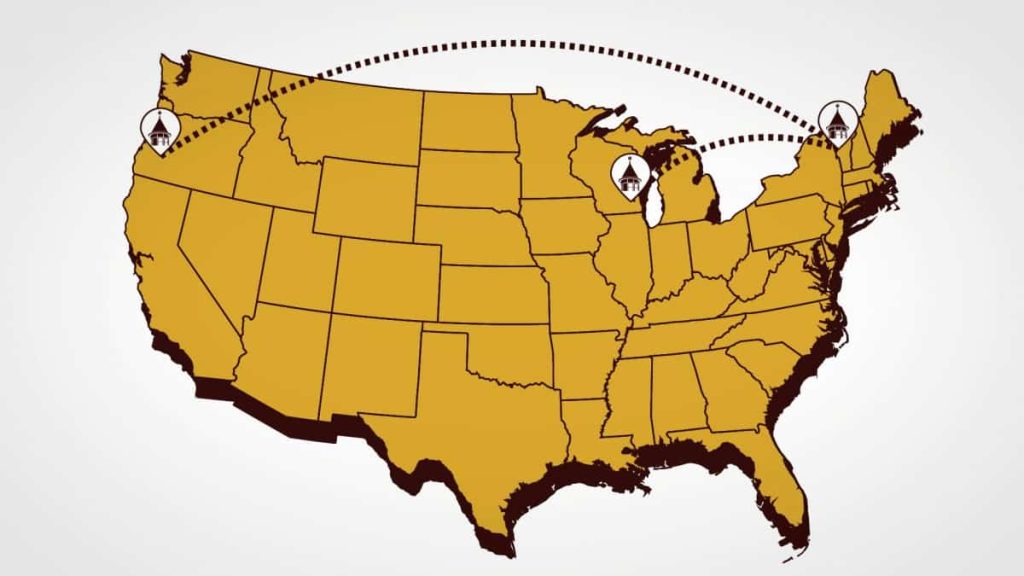
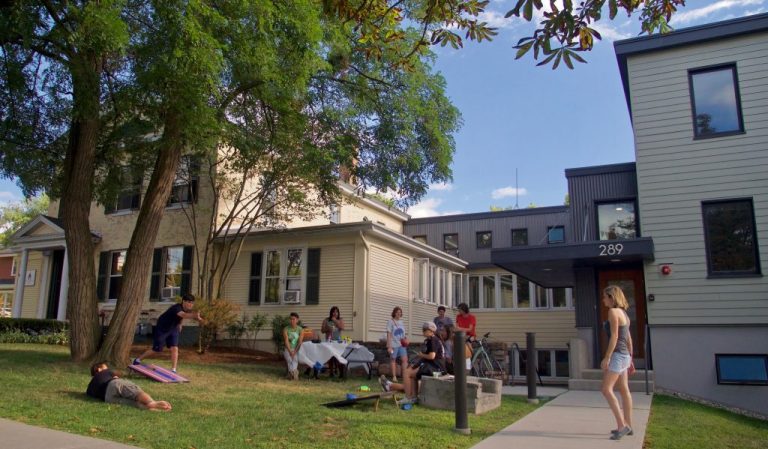
The box stores in town (and probably in your town, too) are well-stocked for the college rush – laundry hampers, under-bed-bins, laptop cases, phone chargers, fans and lamps are all piled up in order to outfit new apartments and bedrooms. Here at Mansfield Hall, a college support program for students with disabilities, we’ve also spent the summer preparing for the fall – we’ve got a new commercial kitchen and cafe for culinary instruction and community meals, an entirely new building, and a well-trained staff of Student Life Coordinators, Academic Coaches, and Mansfield Fellows ready to greet and support our returning and incoming students.
With so much anticipation and expectation it’s hard to imagine that anything will get in the way of student success. As students arrive at Mansfield Hall they will all engage in a student-centered goal-setting process in order to create a roadmap for their ongoing journey towards independence. Setting goals organized around academic success, community service involvement, building pro-social connections, increasing self-advocacy, and demonstrating self-care and self-management will help students become increasingly active participants in their own life story, and will help them move forward in their academic and inter- and intra-personal development.
But what happens when there’s a speedbump, a roadblock, a detour? What happens when the best laid plans of mice and men go astray? How do we overcome flagging motivation, the fear of the unknown, or a conflict born of the delicate interplay of independence and responsibility?
At Mansfield Hall we’ve formally adopted and implemented the specific and well-researched approach to navigating these opportunities for growth known as Collaborative Problem Solving, or CPS.* The key tenets of CPS are empathy through active and reflective listening, actual problem definition (hint: the actual problem usually isn’t the presenting issue!), and an invitation to find a collaborative solution. Put simply, the CPS approach allows our staff to partner with students in order to face well-defined problems shoulder-to-shoulder, and solve them together in a way which builds self-esteem and the capacity for independence. Through this approach we’re able to better maintain the important healthy relationships which are central to a pro-social growth process, while also face and overcome the predictable, and unforeseen, roadblocks that inevitably pop up on our student’s journey toward independence.
If you’d like to learn more about CPS at Mansfield Hall, or have any questions about how we can help you or a college-capable young adult in your life, please contact Grant Liebersberger at [email protected]g.
Learn more about our college transition program for students with autism.
*CPS refers to both Collaborative Problem Solving and Collaborative & Proactive Solutions. Initially developed by Dr. Ross Greene, Collaborative Problem Solving remains the intellectual property of Mass. General Hospital and it’s organization Think:Kids, under the current direction of Dr. Stuart Ablon. Now independent of the organization, Dr. Greene refers to his work as Collaborative & Proactive Solutions. We have simply referred to the more common name, although the fundamentals of both approaches remain essentially identical.

Feeling overwhelmed in college- but not sure why? you’re not alone.
The key isn’t just “pushing through”, it’s learning to recognize what’s happening before you hit that wall, and having systems to reset.
That might look like:
• stepping outside for a walk
• box breathing between classes
• putting on a guided meditation
• reaching out to someone you trust
Small supports = big difference over time.
At Mansfield Hall, we help students build the awareness and tools to regulate, recharge, and navigate college in a way that actually works for them.
What’s one thing that helps you reset when you’re overwhelmed?
#CollegeLife #StudentMentalHealth #ExecutiveFunction #StressManagement


Excellent week across the board!
People Ops team member Jo touched down in Madison, receiving a warm welcome with coffee and a trip to see the Capitol building. VP of Program Ops Hayley grounded herself and took in the beauty of the Statehouse. Pancakes were served, and Burlington student Nikhil took the stage to perform with his choir.
A great week to zoom out and back in- and reflect on all the things we have to be grateful for!
#collegesupport #neurodiversity #worklifebalance

College can be energizing… and draining.
If you’ve ever felt socially exhausted, you’re not alone.
Understanding your limits (and what helps you recharge) can make all the difference.
#CollegeStudents #Neurodiversity #StudentWellbeing

Hangin` in there until spring weather kicks in!
This week at Mansfield Hall our Eugene, OR students did some rock climbing, Burlington, VT connections students took an outing to the bowling alley/arcade, while others took a trip to a local sugar house to learn about all things maple syrup. Students in Madison, WI continued their endeavors to learn about all things maintenance...and they make it look fun!
Happy Friday Friends- enjoy the weekend.

Mansfield Hall had the joy of hosting some professionals at our Madison, WI location recently, which included a student panel.
One of the questions asked was: What do you like about Mansfield Hall?
The answer: how inclusive it is.
No one gets to choose the brain they have, but we do get to choose the world we create. We choose to accept, celebrate, and work toward a world that’s more inclusive of every brain and the incredible things they can do.
Happy World Autism Awareness Day. We see you, and we celebrate you for all that you are and all that you can be!
❤️MH
#autismawareness #neurodiversity #collegesupport

Sensory overload happens when your brain receives more sensory input than it can comfortably process.
Our nervous systems are constantly taking in information, but when there’s too much coming in (or it’s coming too fast) our systems can become overwhelmed.
We get it, and it can be managed with small, intentional supports like reducing input, creating predictable routines, and building in quiet recovery time.
