








Transitional College Programs for Students with Autism Spectrum Disorders (ASD)
Reality check: no one is going to wake you up in college. In fact, your parents are likely at home sipping Bloody Marys discussing how nice it is to have turned your room into the guest room and how relaxing the mornings have become without having to pound on your door repeatedly. Similarly, no matter what any college tells you about their services, the truth of the matter is that you need to go to them to access those services programs – no one will come to you. Professors will not call you to find out why you missed class and your tutor isn’t going to wait more than ten minutes for you to show up. Obviously, colleges and employees will vary on how intimately involved they are with your daily life, but you can’t plan on someone carrying you on their back for the next four years. No one is going to wake you up.
Now that we have established your need for an alarm clock, this is also where you need to be aware enough to know what kind of college experience is right for you. Because, the good news is that there are plenty of transitional college programs for students with autism spectrum disorders around the country that will wake you up. If you know that you will need help with learning independent living skills and a greater level of academic and social support than a traditional college offers, then you should spend your time investigating programs specifically designed for diverse learners, who require life skills assistance. Generally, these college programs for students with autism spectrum disorders fall into three categories: college experiential programs, specialized college programs, and transitional programs.
College Experimental Programs
Experimental Programs are college programs for students with autism spectrum disorders who do not have the academic capability of earning a full degree, but will benefit from taking some courses, getting involved on campus, and learning independent living skills. Colleges around the country offer programs like this and the price varies greatly. Often the costs can be offset through government subsidies, such as Medicare or social security disability insurance. So why would you spend money on going to college without earning a degree? Research clearly shows that students who participate in some form of post-secondary education have better job satisfaction and earn more money, than students who don’t.[1] This is a great opportunity for students to mature and develop appropriate social skills. Plus, it’s college and it’s still fun. Many of these programs not only emphasize vocational and independent living skills, but also getting involved on campus. Check out www.collegeautismnetwork.org for a comprehensive list of experimental college autism programs across the country.
Specialized College Programs
Specialized college programs focus on students with specific disabilities who have the academic potential to be successful in college, but need additional support. These on-campus college programs for students with autism spectrum disorders provide students with a greater level of support in academics, social skills, and independent living. Not only do students have the opportunity to earn a traditional college degree, but in these programs, they also develop the skills to be successful in their career. Transitional programs across the country specialize in helping students with autism, Asperger’s syndrome, learning disabilities, anxiety, and ADHD. These programs are a great opportunity to be integrated onto a campus, while also receiving advanced support. Typically, specialized college programs charge additional fees on top of tuition, so they can be expensive. Additionally, your options will often be limited to that campus and the majors available at the college. Explore www.thinkcollege.net for a list of some specialized autism college programs.
College Transition Programs for Students with Autism
Transitional college programs for students with autism have increased in popularity. These private college autism transitional programs work with higher education institutions to help college-capable students develop the skills necessary to be successful in college independently. Students generally live off campus while attending a variety of local colleges to begin building the necessary skills to transfer to full-time college study. Programs generally work with students on improving executive functioning skills, academic skills, and vocational skills, while students practice living independently with varying levels of support. These programs are a great option for students who need additional time to transition and are still unsure of their college aspirations – or who might need someone to knock on their door. Given the supportive environment, autistic students are able to ease through the transition to college and increase their likelihood of success, without having to commit to a specific college right after high school. Learn more about succeeding in college with autism here.
[1]Grigal, M., Hart, D., Smith, F. A., Domin, D., & Weir, C. (2016).
Good things take time- Eugene Halloween on Polaroids



Obsessed with a crafty queen! Aven and life skills coach Juneau working on her Halloween costume 🎃👻.
PS. Burlington students, be sure to check out sewing club!

Sometimes a 5K is called a fun run- can confirm that much fun was had by all! 🏃

We`re doing our best to soak up these last fall days- it was well worth the effort this hike took!

There’s some fascinating research coming out surrounding the possible links between neurodivergence, hyper mobility, and regulation right now.
The overall conversation is surrounding the idea that neurodivergent folks are 4 times more likely to have generalized hypermoblity- a connective tissue disorder where the ligaments in the body are looser and thusly have to effort extra hard to hold everything in the body together. This additional effort the body has to exert daily to keep everything in order may be linked to a host of things, all pointing to the idea that these folks systems are working overtime to keep regulated.
Exercise, especially strength training can help ease this strain on the body by strengthening the muscles around the ligaments, which can help ease the job of those ligaments with consistent training over time.
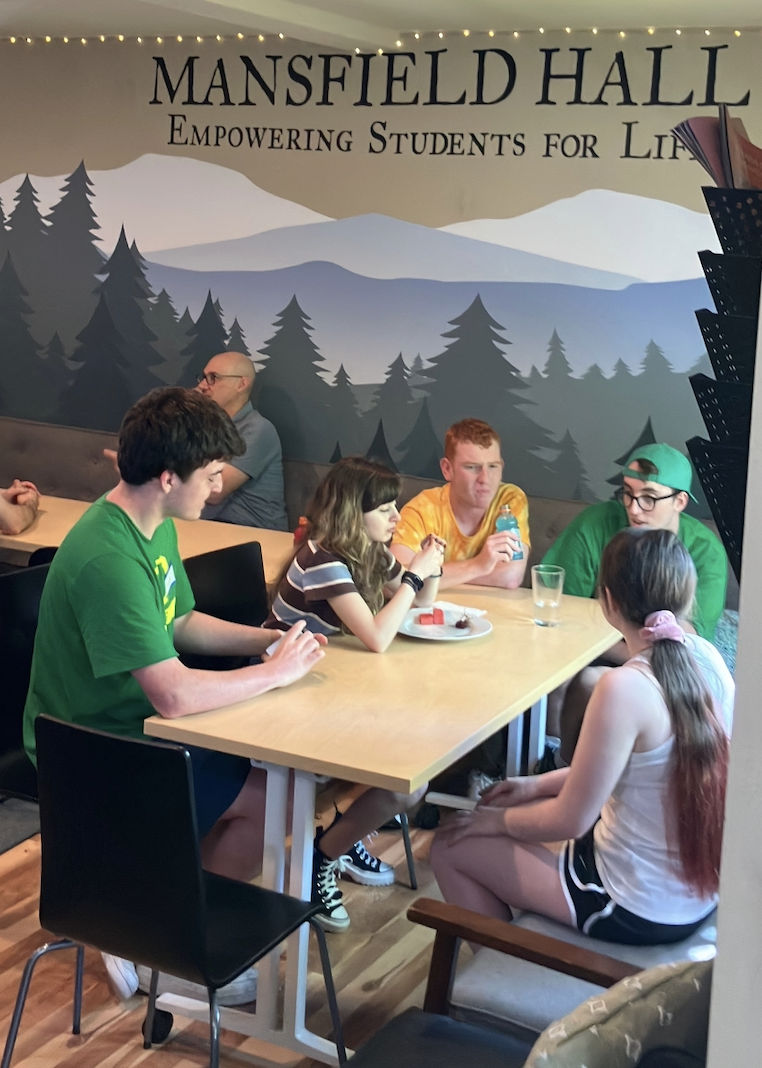
Mansfield Hall offers students the opportunity to join in for two structured workouts a week focused on upper and lower body as well as core stability for this reason!
References
https://f.mtr.cool/1zp81xihlb
https://f.mtr.cool/0cuybkaq1y
https://f.mtr.cool/fcxsdbfwx4
https://f.mtr.cool/qxsnb8vtjx
https://f.mtr.cool/pridyliawk
