


College Support Programs for Students with Asperger’s Syndrome: The Services Cliff
College Support Programs for Students with Asperger’s Syndrome: High School, The Services Cliff, The Buffet Approach, And How To Find the Help You Need In College
In November of 1975 then President Gerald Ford signed into law the Individuals with Disabilities Education Act (IDEA), which dictates that all public schools (K-12) provide all students “a free and appropriate public education that emphasizes special education and related services designed to meet their unique needs and prepare them for further education, employment, and independent living.” This legislation was a watershed moment in public education, and has resulted in 40 years of developments in targeted accommodations, modifications, and support services for students who learn differently. The thing is, these services end upon graduation from high school (and can only be extended up until age 21, but only if a student does not leave secondary schooling). Upon leaving high school there is a sharp reduction in the services offered to Asperger’s students, and many students and families are unprepared for the Services Cliff.
To put it simply, the extensive supports, services, interventions, additional personnel, and curricular modifications which may have been available, integrated, and complementary (ie free) in high school all evaporates the minute a student receives their diploma. Poof. Gone. Zippo. Zero. Nada. Nothing.
At that moment, the student leaves the world of IDEA and transitions into the world of the Americans with Disabilities Act (ADA). Ever since the passing and implementation of the ADA in the early 1990’s, colleges have been working hard to add depth and breadth to the supports and services they provide diverse learners such as those with Asperger’s Syndrome, and for the most part, they’ve done pretty well, although admittedly ADA is nowhere near as comprehensive in terms of educational supports as IDEA. All college campuses now have an “Office of Student Services” (disappointingly, some colleges do retain verbiage like “Office for Disabled Students” or similar regressive terminology) where eligible students can self-identify, register, and be afforded an array of appropriate accommodations commensurate with their documented learning differences, such as extended time on tests, access to class notes, a scribe, or other accommodations to facilitate unimpeded access to the curriculum. This is good news for students with diverse learning needs such as Asperger’s, as it opens up the possibility of attending a myriad of colleges and universities that might have otherwise proven to be unwelcoming or inaccessible prior to the ADA’s legislative mandate of equal access.
But just because colleges offer supports and services (some at the minimum ADA requirements, and others with extensive and comprehensive approaches to learning supports) the environment in which these services are offered is vastly different to that of the high school. This is best described as a Buffet Approach.
The colleges lay out a buffet, but it is entirely incumbent on the student (note: the parent is typically cut out of this equation completely by nature of the student’s age) to self-identify as a student who would like to access the buffet (register with the Student Services Office). The onus remains on the student to access and activate supports, identify when help is needed, advocate for their rights and needs with professors or other school personnel (who may or may not be versed in ADA mandates or school policies) and generally independently manage the entire process. Colleges, for the most part, draw a firm line in the sand in which they identify that it is their duty to provide the supports, but it is entirely up to the student to access the services. While in high school services were brought to students, in college students must actively seek them out. In fact, in many schools, even if a student is identified as needing support there is no mechanism to bring that support to them, and colleges generally draw a firm line in the sand: they will not “cross the threshold” to bring services to a student. The student must “cross the threshold first” and initiate services at every level. For many students, who are otherwise completely capable of college success, the Buffet Approach is a wholly inadequate landing zone after falling off the Services Cliff.
At Mansfield Hall, we serve as a bridge between the supportive services of high school and the more student-centered environment of college. Our students are the students who recognize that they are ready to engage in college courses, but may not yet be ready to consistently and independently self-identify when they need supports, nor do they always know how to access the buffet laid out by the colleges. Through an integrated and comprehensive array of social and academic supports which are offered within our residences we are able to not only provide the support a student needs, but also identify when they may need them, and we are even able to consistently “cross the threshold” (ie go upstairs and literally knock on a student’s door if they miss a tutoring session) to make sure they’re getting them. Additionally, Mansfield Hall represents an integrated approach to supporting Asperger’s students both socially and academically, thereby serving “the whole student” in a comprehensive relationship-based living and learning community.
Our goal is to provide the necessary services, including serving as active liaisons with the Office of Student Services on the college or university campus, while also helping students build the confidence and capacity to titrate off of Mansfield Hall’s network of support and into the college’s, by helping them build an integrated and transferrable skill set which will lay the foundations for success well-beyond their enrollment with Mansfield Hall.
If you’re staring over the IDEA Services Cliff, and the ADA Buffet Approach looks far away and fraught with peril, then Mansfield Hall can serve as a bridge to provide your student with a soft landing at college, and a longer runway, paved with successes and supports, which can help them generate the speed they’ll need for a liftoff and independence in college, and beyond.
If you would like more information about Mansfield Hall please contact Jake Weld, M. Ed., Director of Admissions, at [email protected].


Feeling overwhelmed in college- but not sure why? you’re not alone.
The key isn’t just “pushing through”, it’s learning to recognize what’s happening before you hit that wall, and having systems to reset.
That might look like:
• stepping outside for a walk
• box breathing between classes
• putting on a guided meditation
• reaching out to someone you trust
Small supports = big difference over time.
At Mansfield Hall, we help students build the awareness and tools to regulate, recharge, and navigate college in a way that actually works for them.
What’s one thing that helps you reset when you’re overwhelmed?
#CollegeLife #StudentMentalHealth #ExecutiveFunction #StressManagement


Excellent week across the board!
People Ops team member Jo touched down in Madison, receiving a warm welcome with coffee and a trip to see the Capitol building. VP of Program Ops Hayley grounded herself and took in the beauty of the Statehouse. Pancakes were served, and Burlington student Nikhil took the stage to perform with his choir.
A great week to zoom out and back in- and reflect on all the things we have to be grateful for!
#collegesupport #neurodiversity #worklifebalance

College can be energizing… and draining.
If you’ve ever felt socially exhausted, you’re not alone.
Understanding your limits (and what helps you recharge) can make all the difference.
#CollegeStudents #Neurodiversity #StudentWellbeing

Hangin` in there until spring weather kicks in!
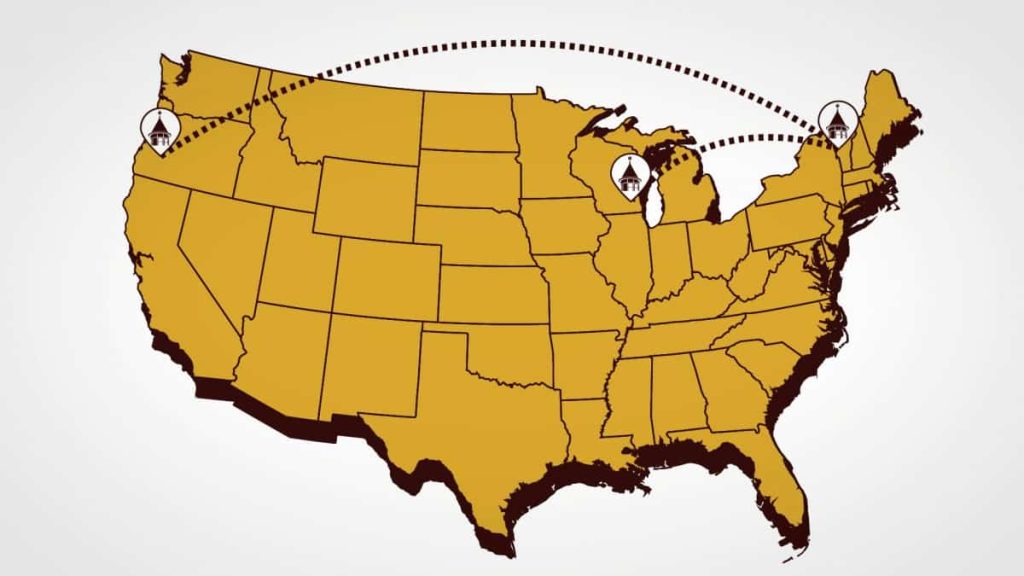
This week at Mansfield Hall our Eugene, OR students did some rock climbing, Burlington, VT connections students took an outing to the bowling alley/arcade, while others took a trip to a local sugar house to learn about all things maple syrup. Students in Madison, WI continued their endeavors to learn about all things maintenance...and they make it look fun!
Happy Friday Friends- enjoy the weekend.

Mansfield Hall had the joy of hosting some professionals at our Madison, WI location recently, which included a student panel.
One of the questions asked was: What do you like about Mansfield Hall?
The answer: how inclusive it is.
No one gets to choose the brain they have, but we do get to choose the world we create. We choose to accept, celebrate, and work toward a world that’s more inclusive of every brain and the incredible things they can do.
Happy World Autism Awareness Day. We see you, and we celebrate you for all that you are and all that you can be!
❤️MH
#autismawareness #neurodiversity #collegesupport

Sensory overload happens when your brain receives more sensory input than it can comfortably process.
Our nervous systems are constantly taking in information, but when there’s too much coming in (or it’s coming too fast) our systems can become overwhelmed.
We get it, and it can be managed with small, intentional supports like reducing input, creating predictable routines, and building in quiet recovery time.
