







College Exhaustion: Why College Can Feel More Draining Than a 9–5
College exhaustion often surprises families, especially when students are studying subjects they enjoy and appear to have more flexible schedules than a traditional job.
From the outside, college can look easier than a 9–5. Fewer hours in class. More autonomy. Fewer adults monitoring progress. But college exhaustion is not about hours worked – it’s about the invisible cognitive load students carry every day.
The Hidden Work Behind College Exhaustion
Unlike a structured job, college rarely provides:
- consistent daily rhythms
- clear start-and-stop times
- a single set of priorities
- built-in recovery periods
Instead, college exhaustion builds as students manage:
- shifting schedules
- multiple long-term assignments
- unclear expectations
- social navigation in unfamiliar environments
- decisions about sleep, food, study, and engagement
This invisible labor consumes real energy.
Why Motivation Isn’t the Problem
Students experiencing college exhaustion are often motivated. Many attend class, care deeply about their work, and still feel depleted.
The issue isn’t effort. It’s sustainability.
Without enough structure, college exhaustion accumulates quietly—showing up as irregular sleep, skipped meals, avoidance, or withdrawal rather than obvious crisis.
Why College Exhaustion Often Goes Unnoticed
Because college exhaustion doesn’t always look dramatic, it’s easy to miss. Students may still be attending class or submitting work, but with increasing difficulty and stress.
By the time grades drop or disengagement becomes visible, exhaustion has often been present for weeks.
What Actually Reduces College Exhaustion
Support that only appears after something goes wrong arrives too late. Effective responses to college exhaustion focus on:
- weekly rhythms
- energy patterns
- early disengagement
- manageable expectations
Reducing cognitive load allows students to sustain effort over time rather than burning out.
A Readiness Question Worth Asking
Instead of asking why a student is tired, a more useful question is whether college exhaustion reflects an environment demanding more self-management than the student can currently provide.
That’s not failure. It’s information.
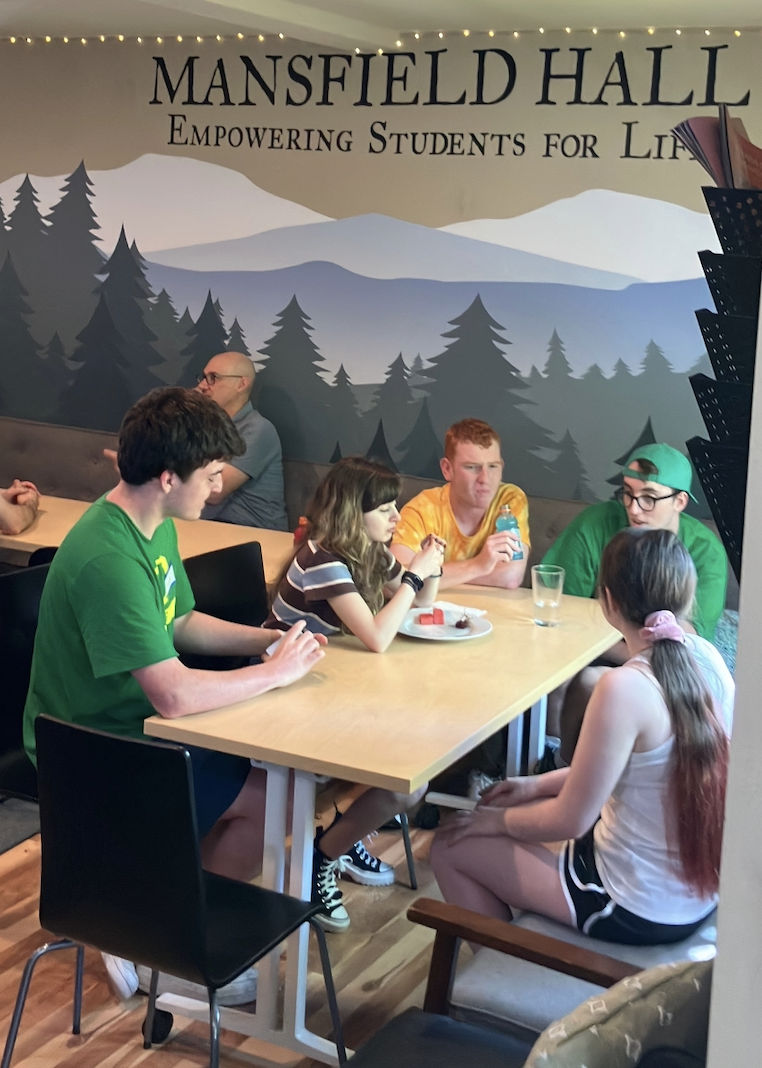
If college exhaustion is shaping your student’s experience, we’re happy to help you think through what kind of support would make effort sustainable. Please feel free to contact Mansfield Hall today.




Obsessed with a crafty queen! Aven and life skills coach Juneau working on her Halloween costume 🎃👻.
PS. Burlington students, be sure to check out sewing club!

Sometimes a 5K is called a fun run- can confirm that much fun was had by all! 🏃

We`re doing our best to soak up these last fall days- it was well worth the effort this hike took!

There’s some fascinating research coming out surrounding the possible links between neurodivergence, hyper mobility, and regulation right now.
The overall conversation is surrounding the idea that neurodivergent folks are 4 times more likely to have generalized hypermoblity- a connective tissue disorder where the ligaments in the body are looser and thusly have to effort extra hard to hold everything in the body together. This additional effort the body has to exert daily to keep everything in order may be linked to a host of things, all pointing to the idea that these folks systems are working overtime to keep regulated.
Exercise, especially strength training can help ease this strain on the body by strengthening the muscles around the ligaments, which can help ease the job of those ligaments with consistent training over time.
Mansfield Hall offers students the opportunity to join in for two structured workouts a week focused on upper and lower body as well as core stability for this reason!
References
https://f.mtr.cool/1zp81xihlb
https://f.mtr.cool/0cuybkaq1y
https://f.mtr.cool/fcxsdbfwx4
https://f.mtr.cool/qxsnb8vtjx
https://f.mtr.cool/pridyliawk

You could say this event was a smashing success!
Eugene students enjoyed pumpkin launching over the weekend. 🎃
#autism #neurodivergent #collegesupport
