









Self-Advocacy in College: Why “Just Communicate Your Needs” Isn’t Enough
Self-advocacy in college is often treated as a prerequisite, when in reality it’s a complex skill many students are still developing.
To succeed at self-advocacy in college, students must notice problems early, identify solutions, decide who to approach, communicate clearly, follow up consistently, and persist when responses are slow or unclear.
That’s a lot—especially under stress.
Why College Makes Self-Advocacy Harder
College removes many informal supports that once helped:
- teachers noticing disengagement
- adults prompting conversations
- structured check-ins
Now, self-advocacy in college is expected to happen independently, even when students are still learning how to do it effectively.
When “Just Speak Up” Breaks Down
When students struggle with self-advocacy in college, it’s often misinterpreted as avoidance or irresponsibility. More often, what’s missing is scaffolding.
Self-advocacy is not a personality trait. It’s a skill built through practice, feedback, and support.
What Effective Support Looks Like
Environments that support self-advocacy in college don’t replace it—they teach it. That includes:
- practicing communication before stakes are high
- helping students identify patterns early
- supporting follow-through
- gradually transferring responsibility
A Fit Question
The question isn’t whether self-advocacy in college matters. It does.
The question is whether a student is ready to manage it independently right now.
If you’re weighing whether your student needs structured support to build self-advocacy skills, we’re happy to chat and explore options! Please feel free to contact Mansfield Hall today.
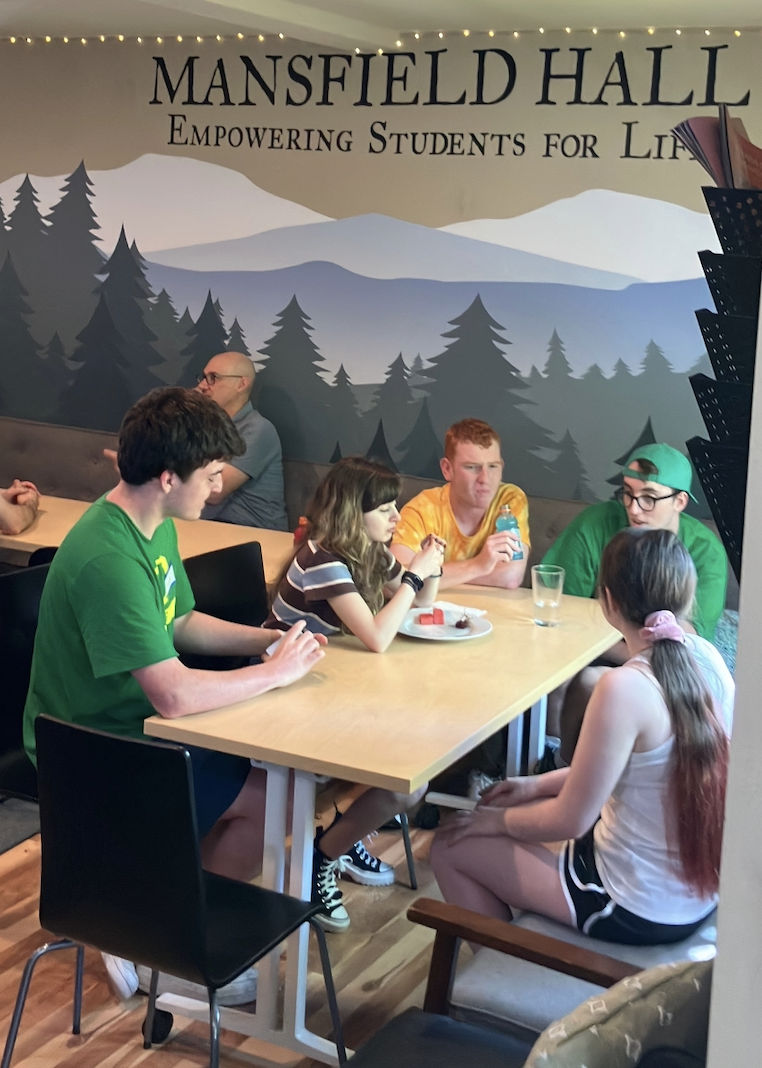

Did you know that all of our Mansfield Hall locations have a private chef?
We`re so lucky to have these talented folks on our team, and students who are interested in beefing up their culinary skills have the ability to learn from them!
#collegesupport #neurodiversity #autismawareness


Still feeling all the joy from our Parents Weekend in Eugene.
Parents, it is such a pleasure to get to know you and share time with your wonderful students.
#autisimawareness #collegesupport #neruodiversity

Good things take time- Eugene Halloween on Polaroids


Obsessed with a crafty queen! Aven and life skills coach Juneau working on her Halloween costume 🎃👻.
PS. Burlington students, be sure to check out sewing club!

Sometimes a 5K is called a fun run- can confirm that much fun was had by all! 🏃
