







Time Blindness in College: Why It Becomes a Problem So Fast
Time blindness in college often becomes a serious challenge far more quickly than families expect – not because students stop caring, but because college removes the structures that once made time visible and manageable.
In high school, time is reinforced constantly. Bells ring. Teachers remind. Deadlines are short and frequent. Parents and staff notice patterns early. In college, time blindness in college is exposed by long stretches without reminders, flexible schedules, and an assumption that students can manage weeks at a time independently.
Students experiencing time blindness in college are often trying hard. They intend to attend class, complete assignments, and keep up with responsibilities. What breaks down is not motivation or intelligence, but the ability to accurately sense how much time has passed – or how long tasks will actually take.
Why Time Blindness Escalates So Quickly in College
College assumes students can:
- track time independently
- plan weeks ahead
- initiate tasks without prompts
- recover quickly after missteps
For students with time blindness in college, these assumptions create cascading consequences. A missed class becomes two. An assignment delayed by a day becomes a week. By the time consequences appear, patterns are already established.
This is why time blindness in college often feels sudden and overwhelming. The environment changes faster than the student’s time-management skills can adapt.
Why Tools Alone Don’t Solve Time Blindness in College
Calendars, alarms, planners, and apps are commonly recommended for time blindness in college. These tools can be helpful – but only when students already have the ability to notice when things are slipping and course-correct early.
Without structure and feedback, tools often become reminders of what should be happening rather than supports that actually change behavior. Students with time blindness in college may set reminders – and still underestimate how long tasks will take or how quickly deadlines are approaching.
Tools don’t fail because they’re ineffective. They fail because time blindness in college requires more than reminders – it requires practice.
What Support for Time Blindness in College Actually Looks Like
Effective support for time blindness in college focuses on making time visible until students can manage it independently. That includes:
- external structure early in the semester
- weekly planning with real feedback
- noticing patterns before failure
- intervening early, not reactively
- gradually releasing responsibility
This kind of support isn’t about control. It’s about teaching students how to perceive time accurately in a college context.
A Fit Question for Families
The most important question isn’t whether time blindness in college exists. It’s whether a student is ready to manage unstructured time right now.
Some students are. Others aren’t yet.
That difference matters – not as a judgment, but as information. When support matches readiness, students can practice skills without being overwhelmed by consequences.
If you’re trying to determine whether time blindness in college is affecting your student’s ability to sustain success, we’re always open to helping families think that through clearly. Please feel free to contact Mansfield Hall today.
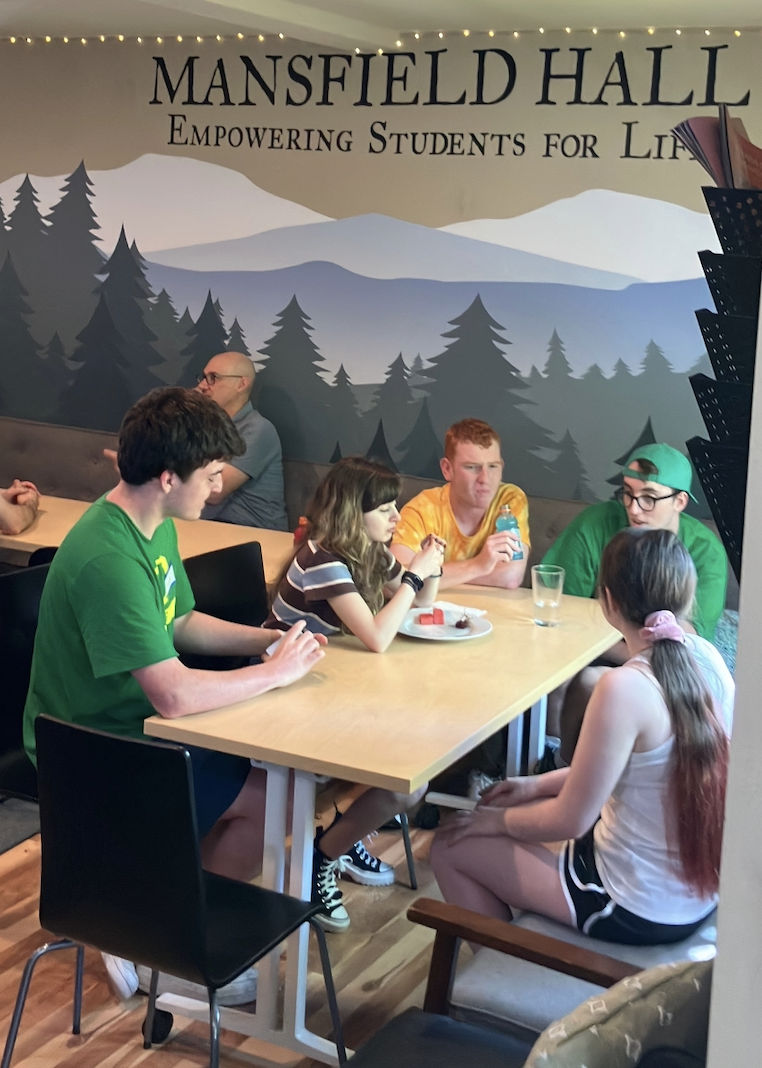


Still feeling all the joy from our Parents Weekend in Eugene.
Parents, it is such a pleasure to get to know you and share time with your wonderful students.
#autisimawareness #collegesupport #neruodiversity


Good things take time- Eugene Halloween on Polaroids


Obsessed with a crafty queen! Aven and life skills coach Juneau working on her Halloween costume 🎃👻.
PS. Burlington students, be sure to check out sewing club!

Sometimes a 5K is called a fun run- can confirm that much fun was had by all! 🏃

We`re doing our best to soak up these last fall days- it was well worth the effort this hike took!
