






The Graduate Student Perspective: A Summer Internship Experience Working with Students on the Autism Spectrum
Following the completion of my first year in the Higher Education and Student Affairs Administration graduate program at The University of Vermont, I began a summer internship with Mansfield Hall, an academic and residential support program for students with a variety of learning needs, including high-functioning autism, executive function challenges, and various learning disabilities. Students travel from across the United States to attend the program, enrolling in any of the five colleges located in the greater Burlington area.
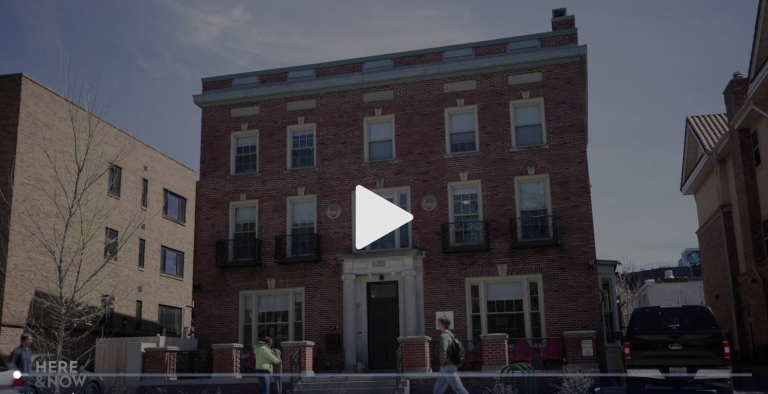
To the uninitiated, stepping through the doors of Mansfield Hall feels like a whirlwind. Located in a recently renovated fraternity home, Mansfield Hall can seem like a labyrinth, with numerous staff members and students populating its nooks and crannies. It is not uncommon for a directors’ meeting to take place in the library, for example, while a group of students are casually chitchatting in the room next door. The wealth of activity can be disorienting at first, but the homey feel, constant conversation, and pulsing energy of Mansfield Hall are where its brilliance lies.
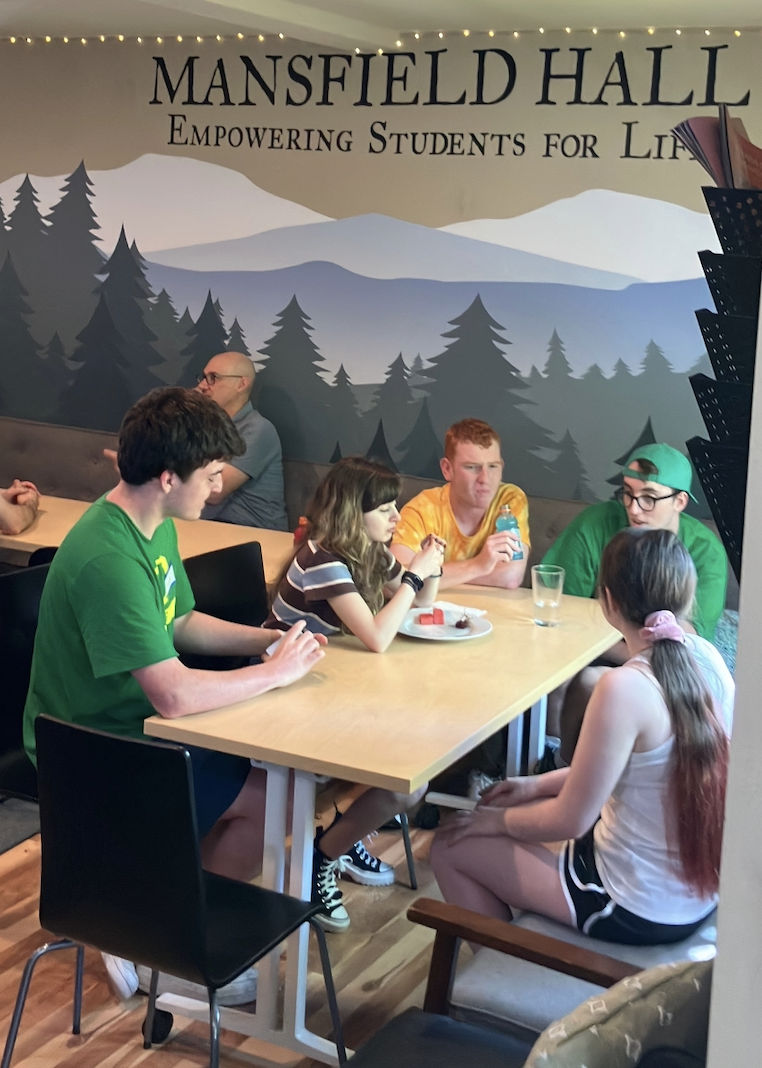
The in-house terminology for Mansfield Hall’s ecosystem is the “milieu.” The belief is that students with Autism Spectrum Disorders (ASD), Asperger’s, and other learning disabilities will benefit from the less-structured and more natural form of behavioral therapy. Although difficult to clearly define, one most certainly knows when one is in the thick of the milieu. Take dinner, for instance. Every evening, a rush of bodies promptly pushes through the kitchen door. Plates hit the table and conversations soar. Add into the mix the highly specialized knowledge many students of the students possess, and the result is a dinner dialogue that ranges from the day’s headlines, to dinosaurs, to 19th century naval battles. It is a perfect encapsulation of the vibrancy Mansfield Hall is able to create.
That same energy can be exhausting, though, as certain personality traits can sometimes make working with the students difficult. Over the summer, groups of students have met each Monday for a few hours for what is known as “social communication.” It is an opportunity for students to practice emotional intelligence by engaging with their peers. Social interaction is often a struggle for many students at Mansfield Hall, so while the social communication group exists as an accessible learning opportunity, Mondays are often a test of both students and staff. Behaviors that many, myself included, find irksome (e.g. little to no eye contact, social awkwardness, and pedantic inclinations) are commonplace among Mansfield Hall students. Perhaps most notably, perspective-taking, the ability to see the world through others’ eyes, is often missing from their repertoire of social skills.
Years of experience working with students with autism, combined with patience and a commitment to student success, is what yields the astounding service the Mansfield Hall staff are able to deliver. However, not everyone who encounters students with autism and Asperger’s is as generous with their time and energy. In fact, it is likely that many graduate students and young professionals may struggle with students on the spectrum, having received little training on strategies for working with students like those at Mansfield Hall. These strategies are paramount if we hope to ensure these students are engaged and, most importantly, successful. To be fair, student affairs professionals are not expected to be experts in this regard. Yet lacking even a basic understanding of these students results in a workforce of young professionals who are under-equipped in an era of higher education that is seeing more students on the Autism Spectrum than ever before.
Beyond Mansfield Hall, the students’ unique mannerisms could be seen as annoyances or even character flaws. And in the world of higher education, these behaviors can cause even the most unflappable student affairs professional to sweat. As a graduate student with limited experience in the field, I am no different. However, many of the behavioral activities practiced by the students at Mansfield Hall have provided me with the tools to navigate potential challenges. For example, one thing students on the Autism Spectrum struggle with is emotional intelligence – the ability to recognize and regulate one’s emotions. While learned techniques helpful for working with students with autism who struggle in this area, I also improved my emotional intelligence as a result.
For emerging professionals, the quick fix to the challenges posed by these students may be to pass them along to a colleague with more experience, or to dismiss their quirks as annoyances. Student affairs professionals must practice patience, rather than succumb to feelings of frustration. Yet, an attitudinal adjustment alone is insufficient. Although often more than academically capable to succeed in college, students with ASD need help with many aspects of college that student affairs professionals may take for granted when working with neurologically typical students. Often, a more individualized approach is necessary. This may require a larger time commitment, but from what I have learned this summer, the extra effort is rewarded. Not only will one be able to better serve these students, but their unique gifts and the value they bring to their community will become increasingly evident.
My time at Mansfield Hall has been a rich learning experience, offering insight into a population of students who are increasingly becoming common on campus. When I return to The University of Vermont in the fall, I will resume my graduate assistantship in the department of student life. Although I believe those of us in student life do a fantastic job serving and supporting students, after this summer I also believe that as we plan, implement, and assess our programs, more can be done to ensure that students with ASD are accounted for. I come away from my internship at Mansfield Hall more familiar with college students with autism and other learning disabilities. Most importantly, this internship has given me the tools to better meet their needs and embrace their unique set of strengths, turning me into a better student affairs paraprofessional in the process.
Good things take time- Eugene Halloween on Polaroids



Obsessed with a crafty queen! Aven and life skills coach Juneau working on her Halloween costume 🎃👻.
PS. Burlington students, be sure to check out sewing club!

Sometimes a 5K is called a fun run- can confirm that much fun was had by all! 🏃

We`re doing our best to soak up these last fall days- it was well worth the effort this hike took!

There’s some fascinating research coming out surrounding the possible links between neurodivergence, hyper mobility, and regulation right now.
The overall conversation is surrounding the idea that neurodivergent folks are 4 times more likely to have generalized hypermoblity- a connective tissue disorder where the ligaments in the body are looser and thusly have to effort extra hard to hold everything in the body together. This additional effort the body has to exert daily to keep everything in order may be linked to a host of things, all pointing to the idea that these folks systems are working overtime to keep regulated.
Exercise, especially strength training can help ease this strain on the body by strengthening the muscles around the ligaments, which can help ease the job of those ligaments with consistent training over time.
Mansfield Hall offers students the opportunity to join in for two structured workouts a week focused on upper and lower body as well as core stability for this reason!
References
https://f.mtr.cool/1zp81xihlb
https://f.mtr.cool/0cuybkaq1y
https://f.mtr.cool/fcxsdbfwx4
https://f.mtr.cool/qxsnb8vtjx
https://f.mtr.cool/pridyliawk
