






Finding Success in College for Students with NLD, Asperger’s, and ASD
Much has been written about NLD (Nonverbal Learning Disorder, also referred to as NVLD), Asperger’s Syndrome (aka Aspgers), and ASD (Autism Spectrum Disorder). In fact, these diagnoses have been on shifting grounds for decades, and even have some overlapping similarities with Social Communication Disorder, Pervasive Developmental Disorder (PDD), and even Attention Deficit Hyperactivity Disorder (ADHD), as well as other diagnosable syndromes or disorders.
Asperger’s was included in the Diagnostic and Statistical Manual of Mental Disorders, Volume IV (DSM-IV, published in 1994) as separate and unique from Autism, and therefore ‘existed’ as a diagnosable disorder. While Asperger’s Syndrome had its own diagnostic criteria, description, and even insurance billing code within the DSM-IV, the 2013 publication of the DSM-V did away with a unique diagnosis of Asperger’s, and instead folded what was previously referred to as Asperger’s Syndrome into the newly formed categories of Autism Spectrum Disorder (ASD), which is described in three levels. Individuals who were previously diagnosed with Asperger’s Syndrome are now most likely to fall into what is called ASD-I or ASD-Level I.
While Aspergers had its own moment of diagnostic inclusion and distinction, NLD has never been classified in any of the volumes of the DSM. However, NLD remains a loosely-defined constellation of diagnostic criteria which point to relative strengths in verbal abilities and corresponding discrepancies and weaknesses in understanding or interpreting nonverbal communication, visuospatial reasoning and memory, challenges with socioemotional skills, and oftentimes a challenge seeing the connections with part-to-whole relationships and understanding the gestalt/big picture. While researchers and clinicians seem to agree that NLD, as a unique constellation, exists within the population there is ongoing debate as to the importance of it receiving its own unique identifier in the next generation of the DSM. Additionally, some clinicians will ‘diagnose’ a client with ASD, but will describe that client’s particular type of ASD with ‘descriptors’ such as Asperger’s or NLD, as a way to further differentiate and describe a client’s strengths and needs.
While the label of a specific diagnosis can be valuable for securing services, informing treatment, or helping individuals understand their own strengths and areas of growth, there is little value in utilizing labels which limit, categorize, or compartmentalize individuals. Additionally, while some clients may not feel aligned with an ASD diagnosis, services and supports (especially in a school setting) often follow specified diagnostic criteria – and while there is debate as to whether or not a student can be more accurately described by using the term Aspergers or NLD, the fact is that without a diagnostic billing code from the DSM-V it is also possible that the same individual may be missing out on services reserved for those with an ASD diagnosis.
Regardless of the label – or lack of a label – students with Aspergers, NLD, ASD-I, PDD, and other diagnosis can all be successful in college. In fact, many of the traits associated with these diagnoses can be great assets to a student in the collegiate setting, including an attention to detail, focused or intense interests in a specific subject, and highly-developed verbal skills. While these areas can be areas of great accomplishment, it is also common for students with these characteristics to also need extra support in executive functioning, social skills, and some independent living skill development.
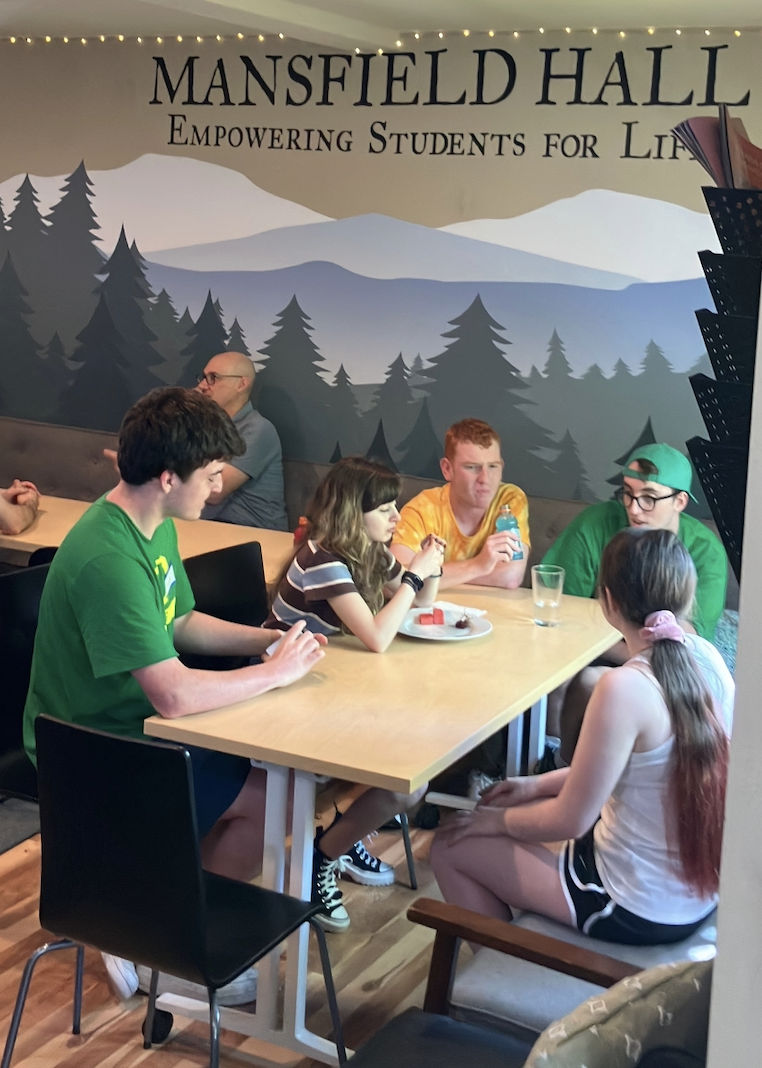
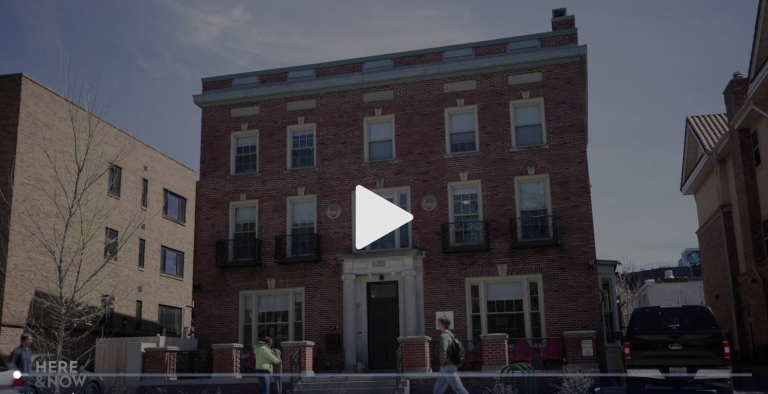
Mansfield Hall works with all kinds of students – including students who most-closely identify with Aspergers, NLD, or ASD – and provides students with a comprehensive living and learning community with embedded academic, social, and independent living skills support. These supports and services are designed to help students successfully make the transition from home and high school to college and greater independence.
For more information about NLD, please check out this great article in ADDitude, or this wonderful book by the late Marcia Rubinstien, a pioneer in the field of education for students on or around the autism spectrum.
Good things take time- Eugene Halloween on Polaroids



Obsessed with a crafty queen! Aven and life skills coach Juneau working on her Halloween costume 🎃👻.
PS. Burlington students, be sure to check out sewing club!

Sometimes a 5K is called a fun run- can confirm that much fun was had by all! 🏃

We`re doing our best to soak up these last fall days- it was well worth the effort this hike took!

There’s some fascinating research coming out surrounding the possible links between neurodivergence, hyper mobility, and regulation right now.
The overall conversation is surrounding the idea that neurodivergent folks are 4 times more likely to have generalized hypermoblity- a connective tissue disorder where the ligaments in the body are looser and thusly have to effort extra hard to hold everything in the body together. This additional effort the body has to exert daily to keep everything in order may be linked to a host of things, all pointing to the idea that these folks systems are working overtime to keep regulated.
Exercise, especially strength training can help ease this strain on the body by strengthening the muscles around the ligaments, which can help ease the job of those ligaments with consistent training over time.
Mansfield Hall offers students the opportunity to join in for two structured workouts a week focused on upper and lower body as well as core stability for this reason!
References
https://f.mtr.cool/1zp81xihlb
https://f.mtr.cool/0cuybkaq1y
https://f.mtr.cool/fcxsdbfwx4
https://f.mtr.cool/qxsnb8vtjx
https://f.mtr.cool/pridyliawk
